

Zero upfront cost
Solar PPA
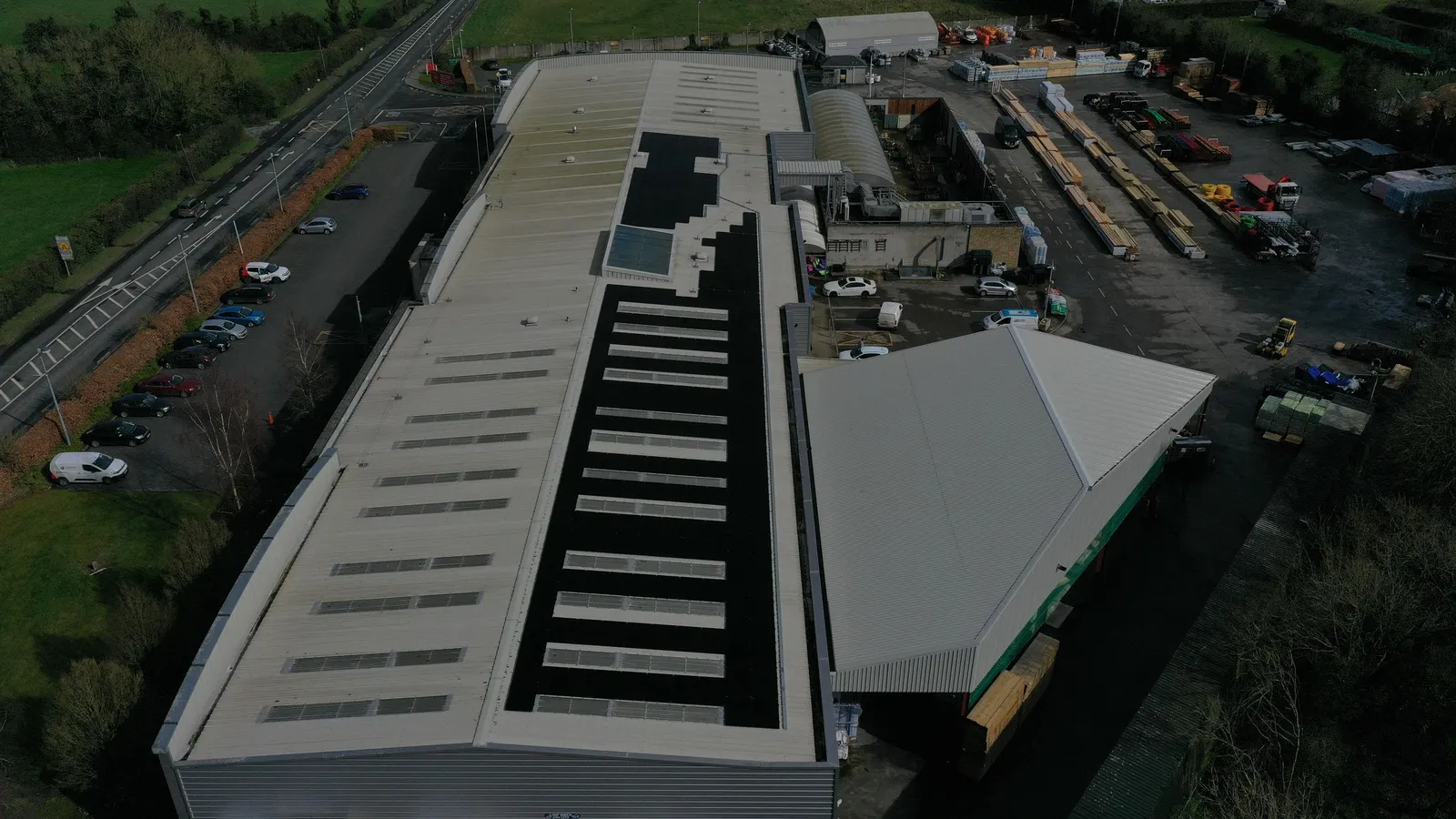
For when the business case for solar works but the capital budget doesn’t. We fund, install, own and maintain the system, and you buy the power it generates on site under an agreed contract.
- No capital outlay
- We own and maintain
- Paid as an operating cost
Accredited & registered Athlone · Installing solar since 2013 (13 years) · 1,000+ installations4.9 from 22 Google reviews
 SEAI Registered
 Safe Electric
 Solar Ireland Member
 Athlone Chamber
How it works
You host the system. We own it.
A Power Purchase Agreement separates the asset from the electricity. The panels on your roof belong to us; the electricity they produce is sold to you.
- 01
We assess and design
We survey the building, model your load and design a system. If the numbers don’t support a PPA on your site, we say so at this stage.
- 02
We fund and install
The capital cost of equipment and installation sits with us. There’s no purchase for you to budget for. How the agreement is treated in your accounts depends on its terms, so your accountant should confirm it.
- 03
You buy the output
You pay for the electricity the system generates and you use, at a rate agreed in the contract, for the term of the agreement.
- 04
We maintain it throughout
Monitoring, servicing, repairs and component replacement are our responsibility for the life of the agreement. Performance risk sits with us.
The comparison
PPA versus buying outright
A PPA isn’t automatically better. For most organisations that can fund the capital, owning the system works out better over its full life. Here’s the trade-off.
Buying outright
Stronger long-term position
- You own the asset and all of the electricity it produces
- Eligible for SEAI grant support and capital allowances treatment
- No ongoing payment once the system is paid for
- Full benefit of any future rise in electricity prices
- Uplift to the value of the property
Against it: requires capital, and you carry the performance and maintenance risk.
Solar PPA
Better where capital is constrained
- No capital outlay and no asset to finance
- Treated as an operating cost
- Maintenance and performance risk sit with us
- Deploy your capital in the business instead
- Predictable, contracted electricity pricing
Against it: you don’t own the system, you’re tied into a long-term contract, and the total cost over the full life is generally higher than owning.
Questions worth asking any PPA provider
- What is the contract term, and what happens at the end of it?
- How is the unit rate set, and does it escalate over the term?
- What happens if you sell the building or the business?
- Who is responsible if the roof needs work during the term?
- What are the buy-out terms, and how are they calculated?
- What happens to the equipment if the provider ceases trading?
Who it suits
Where a PPA makes sense
PPAs work best where there’s a large, steady daytime electrical load, a substantial roof, and a good reason not to spend capital on a solar system.
- Manufacturing and processing sites with heavy continuous load
- Cold storage, food production and logistics operations
- Organisations whose capital is committed to core operations
- Public sector and community bodies facing procurement or funding constraints
- Businesses that want the sustainability benefit without the capital project
Terms are specific to the site
Contract length, pricing and buy-out terms depend on your consumption, your roof and the size of the system. We don’t quote generic PPA terms on a web page. We model your site and put the numbers in front of you.
Reviews
What our customers say
We had Lumen Solar install a full solar system for our commercial premises, and the results have been outstanding. Mick handled everything from the initial site survey to the final handover with total professionalism. The installation was completed on time, the workmanship was top class, and we’re already benefiting from significant energy savings.
I would highly recommend Lumen Solar and, in particular, Mick and his team. From start to finish, the whole process was made incredibly easy. Mick took the time to explain everything clearly and made sure I understood all the details without making anything feel complicated. The service both before and after the installation has been excellent. The team were professional, helpful and a pleasure to deal with throughout the project. I have a very high regard for Mick and his team and wouldn’t hesitate to recommend Lumen Solar to anyone considering solar. Excellent service from a great team.
Dealing with Lumen Solar was a truly excellent experience. From Mick guiding us through the best solution for our needs to the installers who were excellent & gave top class workmanship. They were on time both mornings & cleared up everything after themselves & left the place spotless. Declan gave great advice re the aps etc. Electrician friends said the work was excellent, top class workmanship & so neat. An excellent experience & most happy to recommend.
Totally satisfied with the service from Lumen at management, office and operational levels. The lads who installed it were excellent and couldn't be more helpful. Happy to recommend the company to anyone considering going solar.
We had an excellent experience with Lumen Solar from start to finish. Mick and his team were extremely helpful in guiding us through the most suitable solution for our household needs, from number of panels to battery size. Fergus completed the installation and system setup efficiently and professionally, with everything completed in a day. After installation, Mick took the time to clearly explain the App and how best to optimise the system. We're seeing huge savings already. We would highly recommend Lumen Solar to anyone considering solar energy.
Mick and the team at Lumen Solar were fantastic from start to finish. I had solar panels installed on my farm, and the whole process was smooth, quick, and hassle-free. Mick took the time to explain everything in plain English, answered all my questions, and made sure the system was set up perfectly for my needs. I’m already seeing the savings on my bills and couldn’t recommend them highly enough!
Solar PPAs in Ireland: PPA vs Buying Outright
How a Solar Power Purchase Agreement works for Irish businesses, what it costs you, and how it compares with owning the system outright.
Read article
Solar for SMEs in Athlone and the Midlands
Why Midlands businesses are putting solar on their roofs in 2026: the electricity-price case, the grants, and what a typical SME project involves.
Read article
SEAI Non-Domestic Solar Grant: Business Guide
The SEAI business solar grant is doubled until 6 July 2027, up to €325,200. Who qualifies, how it's worked out, the 45% cap, and where applications go wrong.
Read article
Good to know
Common questions
The things people ask us most about solar power purchase agreements.
Who owns the solar system under a PPA?
We do. Under a Power Purchase Agreement the panels on your roof belong to us, and the electricity they produce is sold to you at a rate agreed in the contract. There is no capital outlay for you to budget for. How the agreement shows in your accounts depends on its terms, so have your accountant confirm it.
Who maintains the system, and who carries the risk if it underperforms?
We do, for the life of the agreement: monitoring, servicing, repairs and component replacement. You pay for the electricity the system actually generates and you use, so if it underperforms, that’s our problem. That’s the main difference from owning the system yourself.
Is a PPA better than buying the system outright?
Not always. For most organisations that can fund the capital, owning the system is the stronger position over its full life. You keep all of the electricity, you are eligible for grant support and capital allowances, there is no ongoing payment once it is paid for, and any future rise in electricity prices works in your favour. A PPA makes sense where the capital is tied up elsewhere, but the total cost over the full life is generally higher than owning.
What happens if we sell the building, or want to buy the system out early?
Both are contract terms, and both should be settled in writing before you sign. So should the term length, how the unit rate is set and whether it escalates, who is responsible if the roof needs work, and what happens to the equipment if the provider ceases trading. Those are questions worth putting to any PPA provider, us included. We will not quote generic terms on a web page. We model your site and put the actual numbers in front of you.
Who handles the grant paperwork for a farm or business project?
It depends which scheme you are under. For TAMS, your farm advisor lodges the application and we supply the system specification, quotes and documentation it needs. For the SEAI Non-Domestic Microgen Scheme, the application is made before work starts and we provide the installer detail and the completion documents that release the payment. Either way, no work should start before approval is issued (TAMS approval from the Department of Agriculture, or the SEAI letter of offer), and we make sure it doesn’t.
What grant support is available for a business?
The SEAI Non-Domestic Microgen Scheme supports non-domestic solar installations up to 1,000 kWp, with a maximum grant of €325,200. The grant is a fixed amount per kWp that steps down as the system gets bigger. The rates are doubled for applications made between 6 October 2026 and 6 July 2027, and SEAI pays the table figure or 45% of the invoiced cost, whichever is lower. Businesses, farms, schools, public bodies, sports clubs and community groups can all apply. Batteries are not covered.
Can a business claim the SEAI Non-Domestic grant and use a PPA?
No. There is no grant on a PPA. The SEAI Non-Domestic Microgen Scheme, worth up to €325,200, is for a business that buys its own system. It is one reason buying outright is usually the stronger option where the capital is available: you get the grant, the system itself and all of the electricity.
Do I need planning permission for solar panels?
Usually not. Rooftop solar on houses is exempt from planning permission, with no area limit, since October 2022. That applies anywhere in the country, including inside the 43 Solar Safeguarding Zones around airports and aerodromes, which cap other kinds of building but not houses. The exceptions for a house are protected structures and Architectural Conservation Areas. Rooftop solar on industrial, commercial and agricultural buildings is exempt from planning permission with no area cap outside the 43 Solar Safeguarding Zones near airports and aerodromes. Inside a zone, the exemption for these buildings stops at 300m² of panels (counting anything already installed), so a larger array needs permission. Ground-mounted arrays and protected structures have separate rules, and we confirm the position for every site as part of our survey.
Explore
Other things we do
Most systems we install combine more than one of these. We design them together rather than bolting them on afterwards.
Commercial Solar PV
Turn a large roof into a long-term hedge against electricity prices, with SEAI grant support of up to €325,200.
Learn more
Agri Solar
Cooling, pumps and workshops draw power through the day, while solar is producing. Grant-aided through SEAI or TAMS 3.
Learn more
Solar Maintenance & Support
Inspections, monitoring and repairs that keep a system performing across its warranted life.
Learn more
Get started
Find out if a PPA fits your organisation
We’ll model both routes, buying outright and a PPA, against your consumption and tell you which we think suits you better.